
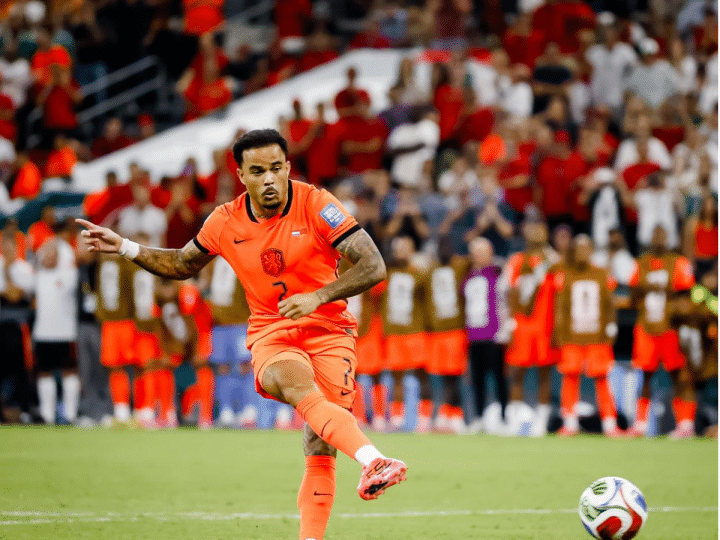
Black football players from the Dutch national team faced a wave of racist abuse after the team was eliminated from the 2026 World Cup on penalties.
The Dutch Football Association (KNVB) strongly condemned the treatment suffered by Justin Kluivert, 27, Quinten Timber, 25, and Crysencio Summerville, 24, after they missed their penalties against Morocco.
The association confirmed it would take legal action against the perpetrators, in a message reflecting the widespread concern within football circles over the rise in hate speech following major matches.
Black football players blamed for team’s loss
The match between the Netherlands and Morocco ended in a 1-1 draw after normal and extra time.
The ‘Atlas Lions’ secured their place in the next round via a penalty shoot-out (3-2), in one of the biggest upsets of the round of 32 at the 2026 World Cup. It led to the Dutch side bowing out of the tournament much to the shock of their fans. The team then faced widespread criticism of its tactics.
However, the sporting defeat quickly turned into a social issue after the three Black players were subjected to a barrage of online abuse – described by the Dutch Football Association as “discriminatory, racist and full of hate”.
The association added that it would file an official report with Meld.Online Discriminatie, a platform specialising in reporting online discrimination, noting that legal experts would assess the nature of the posts. As a result, people could face further criminal charges.
In its statement, the Dutch Football Association emphasised that football exists to bring people together, not to divide them. It stressed that stamping out racial discrimination is a responsibility no less important than safeguarding the integrity of competition on the pitch.
Football brings together millions of different people, whereas discrimination does the exact opposite. It therefore runs counter to everything football stands for.
History sadly repeats itself
What has happened to Kluivert, Timber and Somerville is a repeat of what England players, Marcus Rashford, Bukayo Saka and Jadon Sancho, experienced after the Euro 2020 final. The trio faced widespread racism at home and abroad with some perpetrators being arrested.
The anxiety when Black players step up to take a penalty has not gone away as Xaymaca Awoyungbo wrote for the Guardian in 2024, for example.
This World Cup incident once again highlights the other side of modern football, where the pressures do not stop at the boundaries of the pitch, but extend into the digital realm. Online has become a parallel arena to the matches, where fans’ emotions are transmitted in a matter of seconds, sometimes shifting from legitimate criticism of performance to hate speech targeting players because of their skin colour or ethnic background.
Whilst Morocco celebrated a new achievement that cements its place amongst the tournament’s elite, the Dutch Football Association found itself forced to fight a battle of a different kind. It underscores the fact that some football matches do not end with the final penalty kick.
Featured image via Koen van Weel/ ANP
By Alaa Shamali