

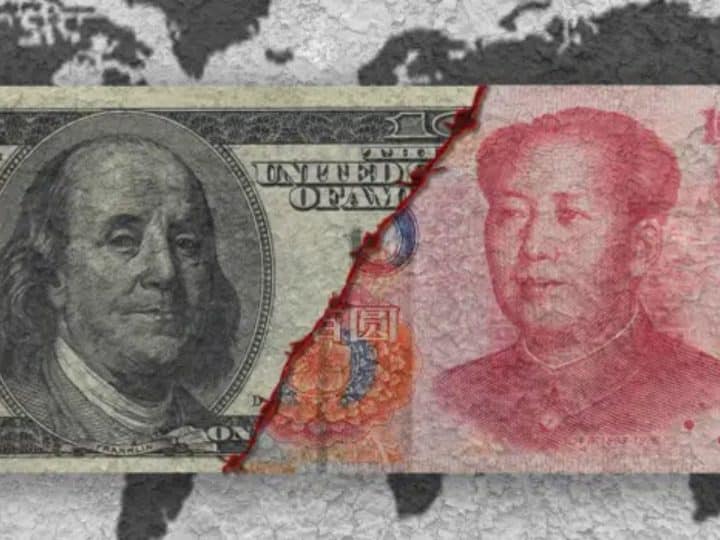
The Wall Street Journal’s (WSJ) latest feature on how American sanctions on Iran failed because China built a yuan-powered workaround will be a difficult read for Atlanticists.
China has built up international trade in the yuan, giving Iran and Russia a way to evade sanctions https://t.co/EviGCVtlXW
— The Wall Street Journal (@WSJ) June 24, 2026
The piece falls shy of praising China’s financial system, which it says is aimed at weakening Washington’s power to dictate world affairs.
The failure of the US’s Economic Fury is explained by WSJ as:
“…… in late April when the U.S. escalated its “Economic Fury” campaign against Iran, sanctioning a major Chinese refinery it said bought billions of dollars’ worth of Iranian oil. The refiner, Hengli Petrochemical, said its supplier had guaranteed the oil wasn’t Iranian.
But it also put the U.S. on notice. Future oil purchases, Hengli said, would be settled in yuan instead of U.S. dollars, the energy market’s main currency—making it harder for outsiders to track the flows.”
China defended Hengli’s rights, too. It said that “illicit unilateral sanctions that have no basis in international law,” adding that it “firmly” defended the lawful rights and interests of Chinese companies.
How they did it
Even Trump admits it
In a separate exchange with Fox News on June 17, 2026, Trump was asked about the difference between giving Iran U.S. dollars and simply unfreezing their frozen assets.
He responded:
We have taken a lot of their money… and we froze it. At a certain point in time, I guess we’re going to have to give it back. You know, if we didn’t give it back nobody would ever invest in the dollar again. If you do that, you really don’t have a system.
BREAKING: @pdoocy presses President Trump on what the difference between giving Iran U.S. dollars and unfreezing U.S. dollars:
“We have taken a lot of their money… and we froze it. At a certain point in time, I guess we’re going to have to give it back. You know, if we didn’t… pic.twitter.com/TcrtA5hz6d
— Fox News (@FoxNews) June 17, 2026
Trump’s point, while rambling, shows he knows that trust in the dollar is falling as the US government has prolifically used sanctions to punish nations not following its rules.
More clearly, he is telling Fox News that if the U.S. makes a habit of seizing and keeping foreign assets, confidence in the dollar erodes. No one will hold dollars or invest in US Treasuries if they fear their assets could be frozen or taken away.
The WSJ has previously reported that some of Iran’s frozen assets date back to the 1979 revolution, but most are more recent payments for oil sales to China, India, South Korea, and Japan, money that got stuck when Trump withdrew from the nuclear accord in 2018.
Estimates vary, but Tehran says it has at least $100 billion frozen abroad, with an initial $24 billion being the priority to unblock.
In conclusion, even Trump and WSJ seem to know the game has changed.
By Nandita Lal