

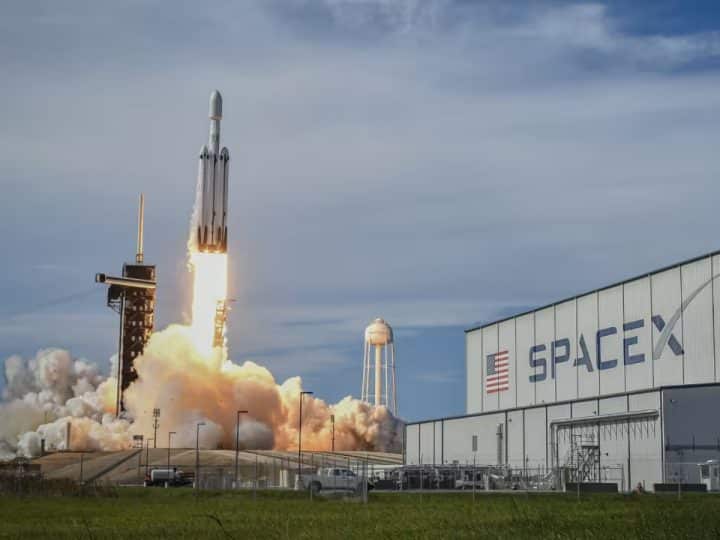
The world’s richest man’s new company — SpaceX — may have counted many a chicken before they hatched.
China’s chokehold on solar cells and equipment, tungsten, indium, yttrium, and other critical materials should cast doubt on the prowess of American industry, defence and SpaceX alike.
The Washington Post’s recent report on the stalled SpaceX-Suzhou Maxwell negotiations shows that all is not well behind the showmanship of American industrial power under Trump and Musk.
China is quietly expanding its export control regime against the U.S. and American allies, reaching beyond rare earth minerals to pinch choke points that affect key U.S. industries, according to investors, business leaders and supply chain analysts. https://t.co/sq1VJE8LUD
— The Washington Post (@washingtonpost) June 17, 2026
In March 2026, Chinese authorities told Suzhou Maxwell, one of the world’s most advanced producers of solar cell manufacturing equipment, to pause negotiations with Musk’s companies and not to sell them machinery according to the Post.
This is a spectacular roadblock for the company that wants to deploy 100 gigawatts of solar-powered artificial-intelligence data centers into orbit every 12 months by 2030.
Nevertheless, SpaceX’s valuation rose as high as $2.97tn on Tuesday, eclipsing the market value of Amazon and Microsoft of $2.64tn and $2.93tn, according to the Financial Times (FT).
The initial public offering (IPO) of the rocket and AI company has made Musk, who owns just over 40 per cent of it and has a large stake in Tesla, the world’s first trillionaire.
According to Bloomberg:
China dominates the large-scale manufacture of key technologies, including gallium and solar polysilicon, which could be a problem for SpaceX given its contracts with the US military and the strategic logic driving the rise of satellite mega-constellations.
Jim Chanos, the founder of the investment firm Chanos and Company, who predicted the 2001 collapse of Enron, said:
It really does feel very much a ‘don’t look at the man behind the curtain’ situation
It is, isn’t it? A $2.97 trillion valuation built on a supply chain that China controls — and a company that cannot admit it, because to do so would be to admit that the American space age rests on China’s permission.
SpaceX and the US military — Same story
One of the reasons that tungsten prices are soaring currently, according to Gracelin Baskaran, director of the Center for Strategic and International Studies (CSIS), a think tank funded by arms companies among others, is because of the US war on Iran.
She told the former UK intelligence chief Richard Dearlove, in an interview recently that there was a “crucial shortage” of tungsten in the USA, a key raw material for the US military following use of munitions during the war on Iran.
US strategy mirrors the British Empire
The threat of China is bringing out the worst imperial tendencies of the United States.
Writing in Le Monde, Evgeny Morozov notes that without mentioning the Bengal famine or Plassey, Trump cronies are now boasting about modeling U.S. agencies on the British Empire.
George Kollitides II, the Pentagon’s principal advisor on economic competition, said the quiet part out loud at the Milken Institute conference in May 2026:
The British Empire really modelled it,” pointing to “privatised companies like the East India Company, which were really public-private, government-driven organisations largely built around commerce and economics.
Morozov documents U.S. activities that include:
-
The Pentagon taking equity stakes in private mining firms like MP Materials and Vulcan Elements
-
The Development Finance Corporation investing in Congolese copper and cobalt, and Angola’s Lobito rail corridor
-
The Export-Import Bank locking allied producers into U.S.-centered supply chains through guaranteed offtake contracts
-
Project Vault building a $12 billion strategic stockpile of 60 critical minerals with fixed purchase prices
-
Conditional loans and health aid used as leverage to extract mineral access from countries like Zambia
He says:
The East India Company took its dividends in cotton, opium and tea. This one takes them, principally, in tokens generated, prompts served, models fine-tuned on someone else’s data. Behind the inference sits the older ledger – copper and cobalt out of Congo, genomic sequences signed away in Zambian clinics in exchange for tuberculosis drugs that may or may not arrive, aquifers drained to cool data centres.
From the Beverly Hilton, none of this is visible. From East India House on London’s Leadenhall Street, in 1770, the Bengal famine was not visible either. Blame it on the architecture.
Writing in Phenomenal World, scholars Ilias Alami and Thea Riofrancos point to the same imperial logic playing out elsewhere. They note the U.S. invasion of Venezuela and abduction of President Maduro to control its oil industry, the blockade of Cuba, the threats against Greenland, and the war on Iran.
The U.S. is also clamping down on the ability of countries like Zambia to pursue polyalignment the strategy of courting investment from both US and China while refusing to align with either.
This “my way or the highway” strategy is not benign. Venezuela, which holds significant deposits of gold, bauxite, and coltan — all critical minerals, was invaded and its president abducted, with the explicit aim of controlling its oil industry for the benefit of U.S. fossil fuel corporations.
The message to any resource-rich country contemplating polyalignment is unmistakable: defiance invites regime change.
Arsonists playing as firefighters
Both Morozov and Alami and Riofrancos highlight a deeper rot: the people now running U.S. industrial policy are the same ones who profited from its decline.
Morozov traces that the Pentagon’s Economic Defense Unit is staffed by alumni of Cerberus, Apollo, and Cantor Fitzgerald, private equity firms that built empires on the ruins of American manufacturing. For instance, Cerberus ran Chrysler into the ground.
Cantor Fitzgerald, run by Commerce Secretary Lutnick’s sons, backed USA Rare Earths, a company with no proven track record. Donald Trump Jr.’s 1789 Capital invested in Vulcan Elements months before it secured a $620 million Pentagon loan.
Alami and Riofrancos add that this private equity mindset focuses on low-hanging fruit and quick wins, not the long-term planning necessary to rebuild industries in secular decline.
SpaceX cannot build its orbital data centers without Chinese solar equipment. The Pentagon cannot replenish its munitions without Chinese tungsten. The people trying to solve these problems are private equity hacks, boasting about being the East India Company, subjugating the global South again, and using the China bogeyman to justify it all.
Featured image via the Canary
By Nandita Lal