
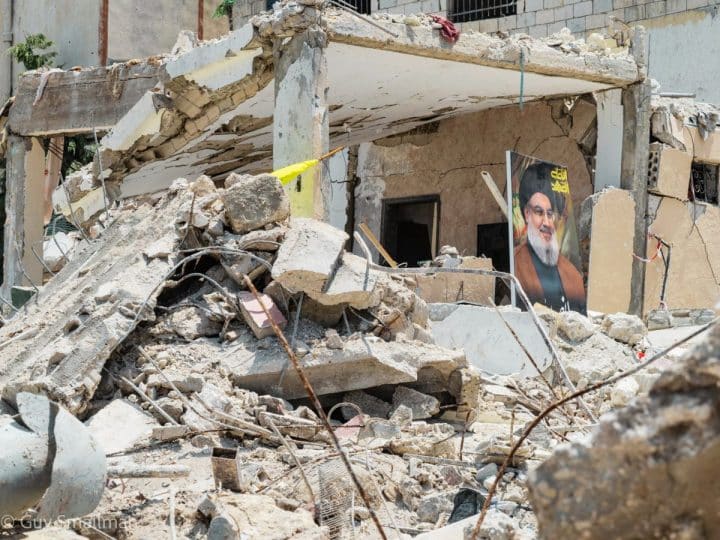
Lebanon — After seventy-two hours of continuous ceasefire, the southern port city of Sidon was looking completely transformed on Tuesday (23 June). Shops were open and the trademark traffic jams were being exacerbated by the continuous flow of vehicles — returning refugees further south.
While no one here trusts the Israelis to abide by agreements, there was a cautious optimism as the dynamic had dramatically changed since previous accords signed in 2024. That truce had been violated by the IDF on over fifteen thousand separate occasions — ranging from minor acts, like incursions into Lebanese airspace by drones and jets, to major ones like bombings, assassinations and the continued occupation of border areas.
Since then, Trump has started a disastrous war with Iran, failed horribly at it and come away looking weaker with the strait of Hormuz acting as a gun being held to the head of Western interests. The Iranians are in a stronger bargaining position than before the war started — and they are putting Lebanon at the centre of their negotiations for a lasting peace with the USA.
Red lines enforced with fire
To underline their position, they launched around thirty ballistic missiles at Israel on 7 and 8 June. They said that the IDF had crossed several red lines in Lebanon — including the bombing of South Beirut for the first time in weeks. To add to Netanyahu’s woes, Trump has become increasingly and publicly impatient, appearing to have suddenly grown a conscience over Lebanese casualties.
Having a regional superpower fighting their corner has given a glimmer of hope to the people of South Lebanon, making the direct negotiations between the Lebanese government and Israel look increasingly meaningless.
Sidon targeted
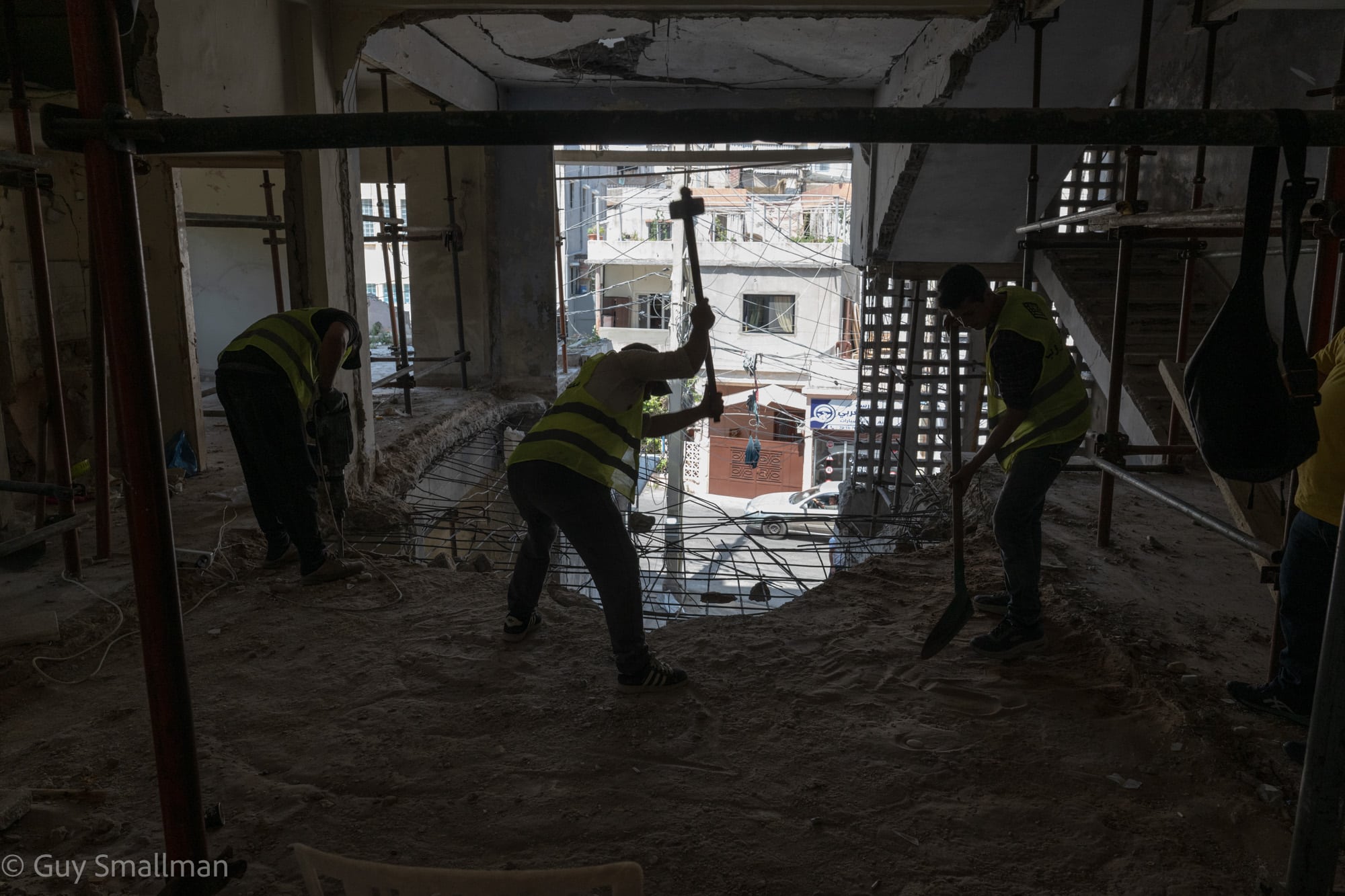 Sidon has suffered far less aggression than towns and cities further south but the price paid by many people there, aside from a ruined local economy, has been heavy. On Tuesday, in the neighbourhood of Aliyah, workers were carefully demolishing the al-Jazzer building which had been struck by two missiles on May 28th. Downstairs in the partially rebuilt mini-market I spoke to locals.
An older resident who introduced herself as Om-Ali described what happened that night:
I woke at 2 am to a loud noise and I was thrown across my room. The dust and the smoke had an ugly smell that I cannot describe. As I was being helped away from the building, I saw the ambulance men carrying one of my friends down the stairs. Both of her legs were gone. She was one of five people martyred in this blast that I was close to.
Locally, there was speculation that the target of the attack was a senior Hamas member called Houssam Zeydan — who had survived an earlier assassination attempt in March. Mona, who owned the convenience store and was struggling to keep the business going, described a man who was not from the neighbourhood who had visited her shop on a few occasions in the days before the attack with his wife and six-year-old daughter:
He said he was visiting from Australia to tie up the affairs of his brother who had recently died. After the bombing they found his head in the bathroom of my friend’s flat on the second floor. The rest of his body scattered all around the area and in the street outside.
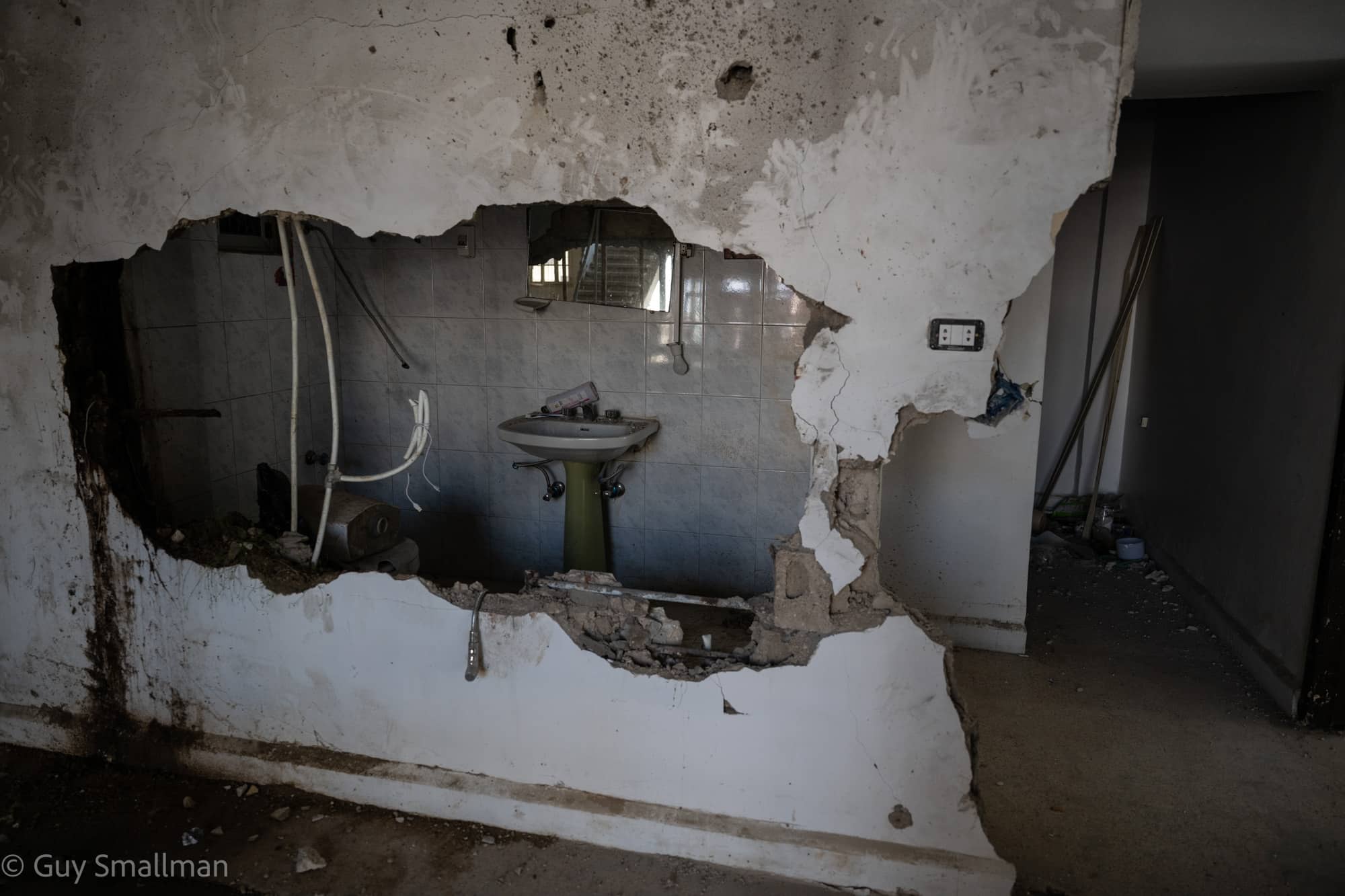
She sung the praises of a local builder who had helped rebuild her shop with temporary materials for free, so she could stay open and begin to recover the losses from the bombing — which had also destroyed her storage unit and its contents.
She was scathing on the response from the Lebanese government:
There are twenty families living in this building who have had to flee. They have suffered terrible losses along with bereavement and physical injuries. No one has been here to assess the damage or ask us how they can help. For seven years I have built this little business and now I shall be forever in debt.
Lebanon — Qanarit massacre
Thirty minutes later, we were at the scene of an even worse massacre that had happened just hours before the hostilities had paused. Last Saturday, as the ceasefire loomed, the Israelis unleashed a wave of strikes across the country killing dozens of people — classic Israelis. One of the targets was the village of Qanarit. It is located in the hills, around seven kilometres south of Sidon. Its local economy revolves around olive oil and its politics around Shia political parties — like Amal and Hezbollah.
It is not the kind of place where you would start filming or stopping people for comment without permission. So we first visited the local mayor’s office. It was agreed that local municipal representative Mohammad Qobeissi would take us to the site and explain what had happened. When our heavily tattooed guide showed up on a scooter, he was initially a bit hostile. He announced that we would not like what he had to say and joked that if we were from the pro-Israel — and Trump loving — Lebanese MTV channel, he would have to break our legs along with our equipment.
Such feeling towards the mainstream media are common in the South. But after a few minutes of conversation, and a couple of lively debates with my communist translator, he warmed to us and was being quite charming by the time our encounter concluded.
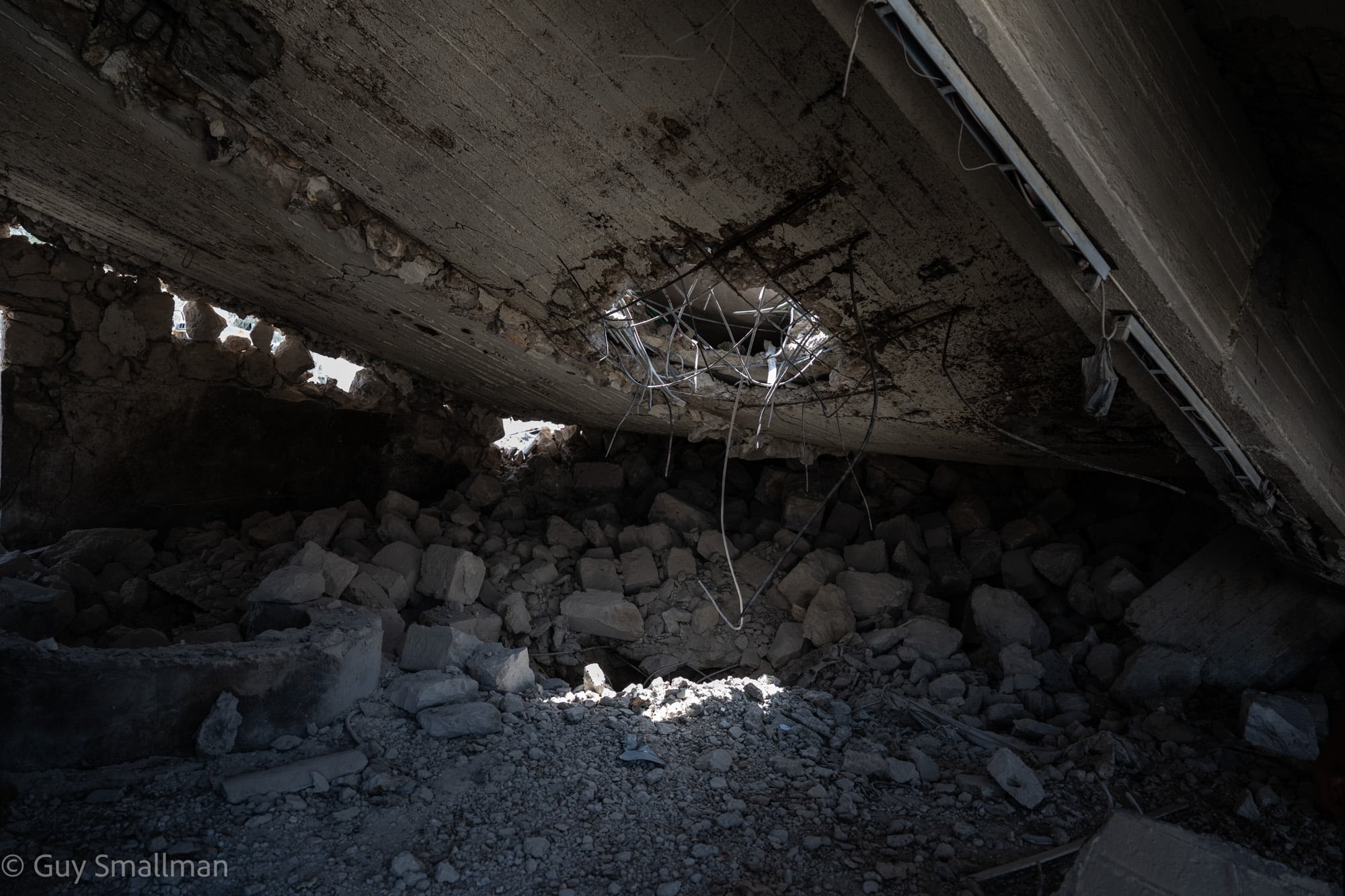
After adjusting a resistance flag placed in the ruins, he started our tour by showing us where one of the missiles fired at the village on Saturday had hit. It pierced the roof of an already partially destroyed building, and then entered the ground below failing to explode. It was unclear when the army would be available to retrieve it safely.
‘They hit a cluster of seven residential properties’
He explained the events that had torn a gaping hole in the heart of the village just a few days earlier:
At around noon on Saturday four missiles struck our village without warning from fighter jets in the sky. They hit a cluster of seven residential properties. They were older buildings which are typically narrow and closer together. All were filled with people. Men, women, children and the elderly.
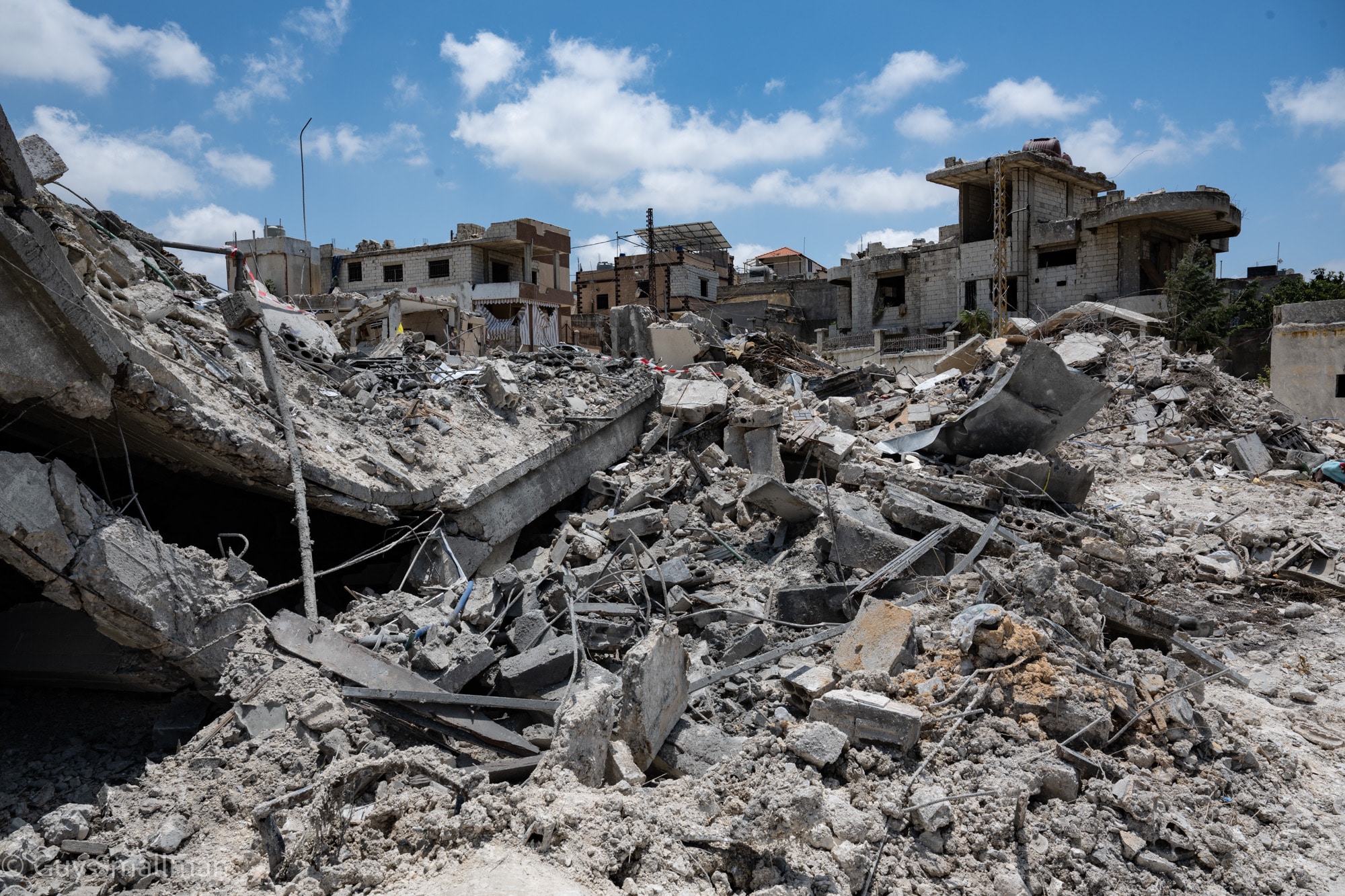
Among those martyred there were only three young men, the rest were women and children and older. In total fifteen people were martyred and between twenty and thirty injured. The seven homes were completely destroyed and fifteen others badly damaged. They also hit the cemetery next door and an antique oil press which was accessible to the public. These bombs must have been huge, like bunker busters?
I concurred with his analysis about the ordnance. The targeted residencies had literally been obliterated to rubble and dust. The crater in the cemetery was vast.
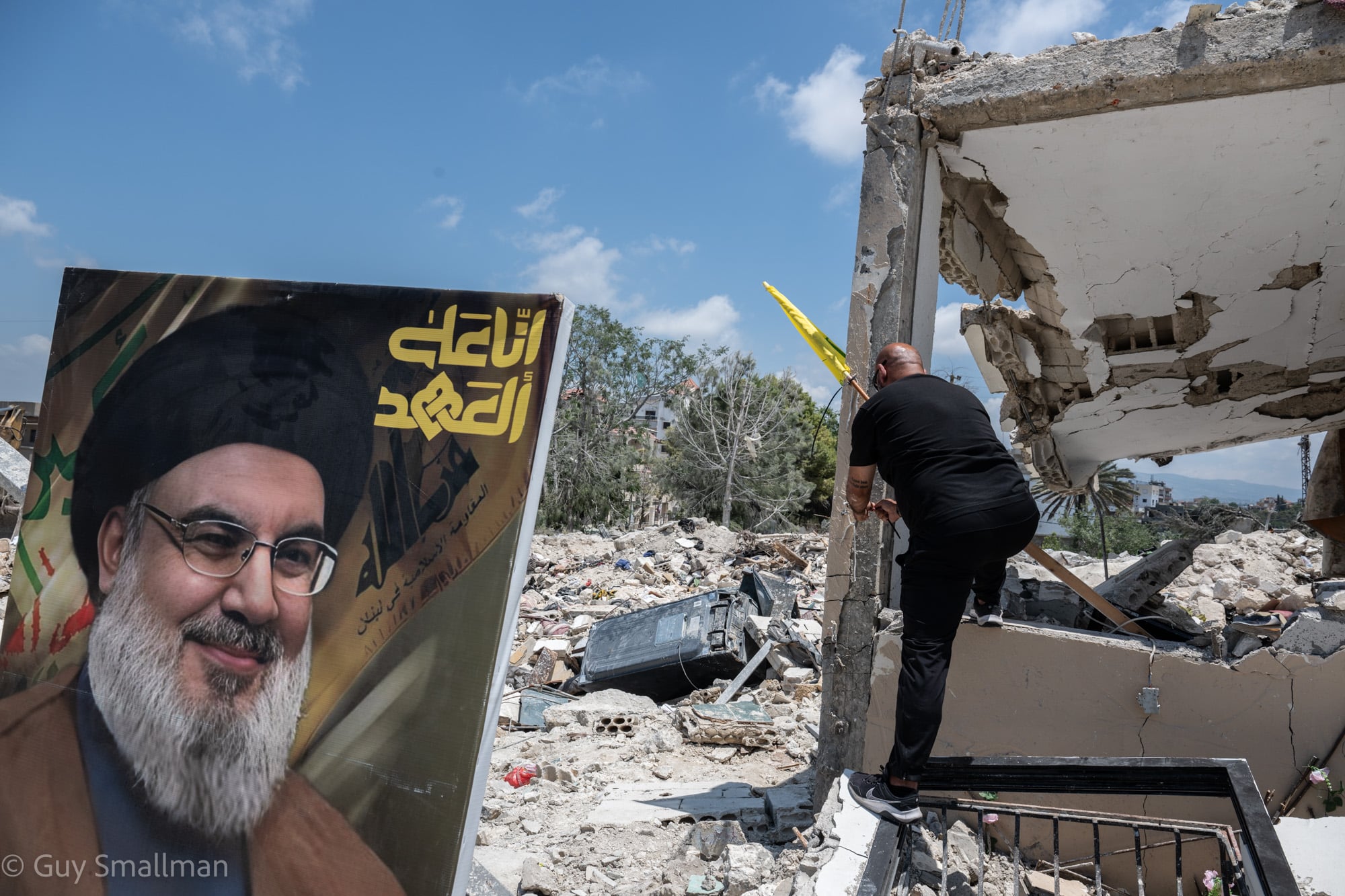
He continued:
This area was previously considered to be safe. The IDF have previously issued evacuation orders telling people to move north of the Zahrani river which is to the south of here. We have welcomed them here as a place of safety. Now there are feelings of guilt about what has happened to some of them. Soon after the strike many of them had no choice but to return here as their villages are occupied and they have nowhere else to go. We reject any lies that there were weapons, fighters or infrastructure here. You can see for yourselves what was destroyed.
He went on to explain the immediate priorities of the municipality and its small team. Half the village was without power which urgently needed to be reconnected. The water supply was in the same state meaning that water tanks had to be transported from the surrounding area. This was hindered by the roads which still needed to be cleared of rubble and debris.
Government in Lebanon caught napping
On the question of the Lebanese government, he felt that when such acts of aggression happen to predominantly Christian villages, there were more statements of condemnation and offers of help. That pro-USA parties like the right-wing Christian Lebanese Forces abused their positions in government to favour those who shared their religion and politics.
In contrast he said that the Hezbollah controlled Public Health Ministry treated everyone equally during the COVID pandemic. He had nothing but praise for the Lebanese Red Cross and Civil Defence who had been first on the scene when his village was attacked.
When asked by my militantly secular translator about the resistance being predominantly Shia Muslim he said:
Every honest person on this planet is part of the resistance along with every free thinker who stands up for the oppressed. It doesn’t matter what religion they come from. Wasn’t Che Guevara part of the resistance and an honest man? Does it matter that he wasn’t Shia? We consider everyone who is honest and resists the Israeli occupation or any oppression anywhere in the world to be part of the resistance.
On the road home we learned online that, in yet another blow for the Israelis, President al-Sharra of Syria, who is known for his pro-western stance, had clarified that Syrian forces would not be getting involved in Lebanon — despite his personal opposition to the Iranian axis. If this is adhered to, then any hope the Israelis had of attacking the Bekaa valley from inside Syrian territory, which they are presently occupying, has gone.
In more ominous news it was announced that the ceasefire had already been violated by IDF forces in Nabatieh who had opened fire on paramedics and civil defence workers attempting to recover bodies from under the rubble.
Featured images by Guy Smallman
By Guy Smallman