

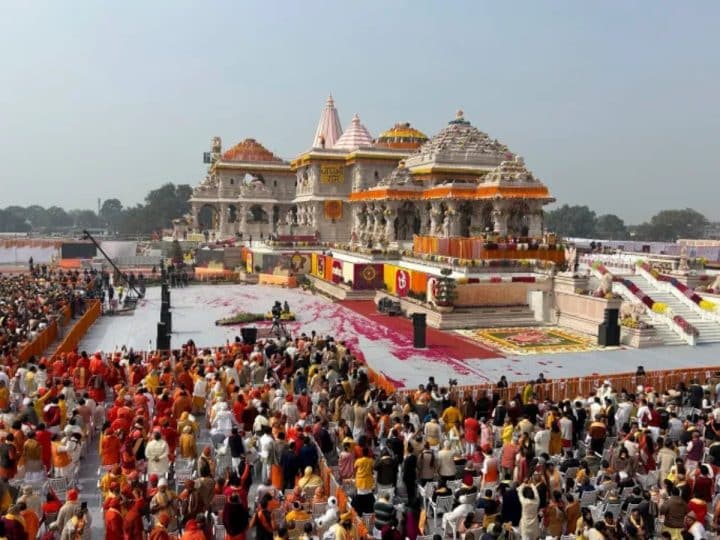
According to The Quint, despite Modi’s BJP right-wing government being mired in scandal after scandal and emerging unscathed, the latest crisis, the Ram Mandir donation theft, may be the biggest test for Hindutva yet.
According to Al Jazeera, for the past month, the Ram Temple in Ayodhya, Uttar Pradesh (UP), has been mired in allegations that its trustees have embezzled potentially millions of dollars in donations from devotees, diverting funds meant for the shrine into their own pockets.
Echoing The Quint, Al Jazeera says the scandal could unravel the BJP’s carefully constructed image as the guardian of the Hindu faith and cost the party dearly in the upcoming Uttar Pradesh elections, due in early 2027.
The temple, opened in 2024 by Modi, was built on the site of a mosque destroyed by Hindu nationalist mobs in 1992.
Hindutva hardliner eyeing succession to Modi
Yogi Adityanath, the UP chief minister and Hindutva hardliner and monk, has ordered a tough probe into the temple theft, triggering unease in the BJP and Rashtriya Swayamsevak Sangh (RSS) leadership.
This has apparently put him at odds with the BJP central leadership and the RSS, with insiders viewing his tough stance as a bid to position himself as Modi’s political heir.
While eight junior staff members involved in counting cash and valuables have been jailed, the high-profile trustees, including Champat Rai and Anil Mishra, have escaped arrest and merely tendered their resignations.
Anti-Muslim symbol
Indian American Muslim Council has previously referred to the temple as “a symbol of the country’s anti-Muslim campaign.”
They have said:
The inauguration of the Ram temple implicitly commemorates one of the saddest chapters in Indian history: the hate-fueled destruction of the 500-year-old Babri Masjid.
One of the country’s most historically significant mosques, the Babri Masjid was torn down by violent mobs in 1992, egged on by Hindu nationalist agitators. It was an enormous act of dispossession that sparked riots across India, resulting in the deaths of hundreds of predominantly Muslim Indians and the destruction of countless Muslim homes.
The echoes of 1992 are still present everywhere in India.
Just last week, prominent Muslim bodies, including the Jamiat Ulama-i-Hind, the Jamaat-e-Islami Hind, and the All India Muslim Personal Law Board, termed the continuous cycle of demolitions of Muslim religious places across the country as an “undeclared emergency.”
Prominent Muslim Bodies Term Demolitions of Religious Places ‘Undeclared Emergency’, To Seek Legal Reliefhttps://t.co/iebOEReabJ
— The Wire (@thewire_in) June 26, 2026
They have announced plans to file petitions in the high courts of Rajasthan and Uttar Pradesh seeking the restoration of mosques, madrasas, and dargahs that have been demolished or served eviction notices.
Anti-Muslim sentiment is a core tenet of the Hindutva project, and the Ram Temple itself stands as its most powerful symbol, a monument erected on the ruins of a mosque, commemorating an act of communal violence that killed nearly 2,000 people, mostly Muslims.
But how much can the forces of Hindutva look away from the theft of devotees’ faith by their own trusted trustees?
Featured image via the Canary
By The Canary