

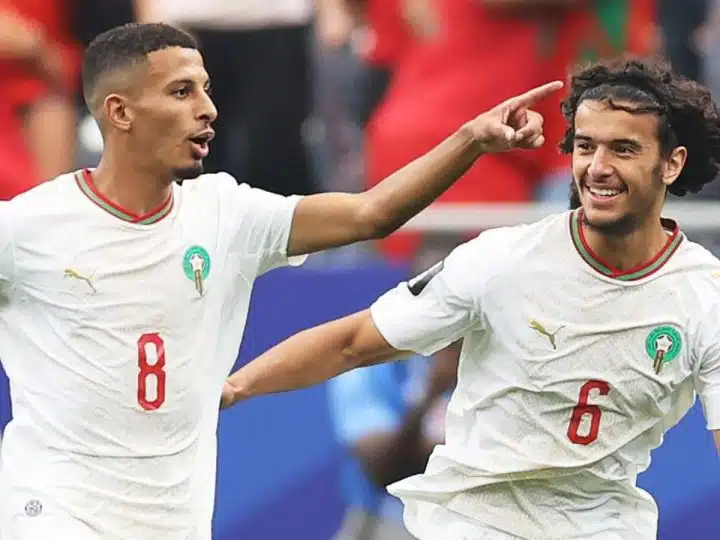
The Moroccan national team no longer needs to be described as a “dark horse.” Its World Cup achievements are no longer fleeting surprises. Reaching the quarterfinals twice shows the “Atlas Lions” have arrived. Qatar 2022 was not their ceiling. It was the start of an integrated football project. They are now imposing themselves among the world’s elite. Fans once celebrated teams that surprised everyone and then left. Morocco broke this rule. They shifted from seeking recognition to being a respected contender. Opponents now prepare for them before every match.
Title contenders?
Morocco entered the Qatar World Cup outside the favorites circle. They proved their worth by eliminating European giants. They became the first African and Arab team to reach the semifinals. The situation changed entirely for the 2026 World Cup. Competitors no longer view them as a surprise. They see a team with the quality to beat anyone. Respect is earned through consistency, not just one lucky game. Reaching the quarterfinals again is not just a statistic. It is a message that Morocco is a leader, not just a guest.
The 2022 team was famous for defensive solidity. The 2026 team shows a more developed identity. They do not just close spaces and counterattack anymore. Now, they control the tempo, possess the ball, and press high. They create chances and handle various game scenarios. Morocco has evolved from a team that survives to one that dictates play. This shift is typical of teams that compete for major trophies.
Morocco’s tactical flexibility is the most dangerous weapon
Their greatest strength is changing style without losing identity. They defend deep when needed. They press high when the opportunity arises. They adapt their tactics to each opponent. This diversity makes them difficult to read. They adjust well to different footballing cultures. Every victory comes from a new solution, proving their maturity.
Championships require the right mentality under pressure. Morocco built a clear, competitive personality. They do not collapse when trailing. They do not lose focus when leading. Their management of matches is calm and efficient. They play with the confidence of established giants.
A team that does not live off one star
Success is not tied to one individual. It is a system where players share the spotlight. Achraf Hakimi leads with experience on the flanks. Azzedine Ounahi has become the team’s midfield brain. He contributes to defense, playmaking, and scoring. Brahim Diaz adds a vital creative dimension as the primary playmaker. He set a record for assists in a single World Cup. Soufiane Rahimi consistently decides matches on big occasions. Yassine Bounou remains a reliable safety valve. Sofyan Amrabat balances the midfield. Ismael Saibari provides extra offensive depth.
Today’s results come from a long-term project. They invested in infrastructure and the Mohammed VI Academy. They attracted talent while maintaining technical and administrative stability. This project transformed human potential into an integrated system. They produce talent for every generation. Morocco’s success is a model for football management.
Morocco: the new face of global football
Morocco represents more than just Arab and African football ambitions. They prove that history is not a requirement for success. Tactical discipline and stability matter more than famous names. Morocco stands equal with traditional powerhouses. Long-term planning bridges the gap with elite football schools. They have moved from making surprises to setting standards. Morocco is now part of the history being written.
Featured image via the Canary
By Alaa Shamali